Friday, June 3, 2016

Jamie Wyeth: 3rd Generation American Master

Jamie Wyeth (American, b. 1946)
Gulls of Monhegan #1, 1992
combined mediums on paper, 22 x 22 1/4 in.
 

Celebrated contemporary realist painter, Jamie Wyeth, is a third-generation artist; son of legendary painter Andrew Wyeth and the grandson of the illustrious painter and illustrator, N.C. Wyeth.  His natural artistic talent became clear at a young age, and—with deep focus—Jamie began to shape his artistic vision in his teenage years. Like his father, Jamie was raised in Chadds Ford, PA with many summers spent on the coast of Maine.  Much of Jamie Wyeth’s work is inspired by the Maine coast, where the landscape and local inhabitants—animal and human—serve as subjects for his work.  This painting depicts two seagulls in the living room of the artist’s house on Monhegan Island in 1992. Known for his humanistic representations of animals, this work is no exception, as he represents the physical attributes of one of his favorite subjects with remarkable accuracy, while also capturing their idiosyncratic behavior.

Following his early success and recognition, Wyeth has completed several notable works depicting political and entertainment figures and historic events, including portraits of President John F. Kennedy, Rudolf Nureyev, Andy Warhol, and Arnold Schwarzenegger; charcoal drawings that documented the unfolding drama of the SenateWatergate hearings; pictorial reporting of NASA space launches and splashdowns; and imaginative pictures for contemporary novelist Stephen King's ABC-TV miniseries Kingdom Hospital, to name a few. Jamie Wyeth's works are included in many public collections, including those of the Museum of Modern Art,  National Gallery of Art, National Portrait Gallery, John F. Kennedy Library, Joslyn Art Museum, Farnsworth Art Museum, Terra Museum of American Art, Delaware Art Museum, and the Brandywine River Museum.

 
Contact the gallery for additional information about this work:
art@cavaliergalleries.com or 203.869.3664

Tuesday, May 31, 2016

Leading Modern Watercolorist - John Marin

John Marin (American, 1870-1953)
Mark and Andrews Island from Deer Isle, Maine, 1920
watercolor on paper, 16 x 19 1/4 in.


As one of the first American abstract painters, John Marin was a visionary in his day; his work helped give rise to the Abstract Expressionist movement. Marin painted primarily in watercolor creating a unique blend of realism and abstraction in his depictions of American scenery. He devoted his energies to distinctly-American subject matter, particularly the energy and vitality of New York City, and the rugged beauty of Maine's coast.

This work depicts two small islands off of Deer Isle, Marin’s longtime summer home. The near-by 6-acre Mark Island once housed a working lighthouse, guiding marine traffic through the Deer Island Thorofare, while the tinier Andrews Island has long been one of the many uninhabited islands along the Maine coast. Marin first visited Maine in 1914, and from that point until the end of his life, the artist spent long periods there almost every year, often arriving in early summer and staying until Christmas. Maine became—along with New York—one of Marin’s enduring passions, its maritime vistas serving as a boundless source of inspiration.

During his life, Marin’s work was continuously shown at Alfred Stieglitz’s famed 291 Gallery, known for introducing America to many important avante-garde artists such as Rodin, Matisse, and Picasso. Marin participated in the seminal Armory Show in 1913, and was subsequently honored with exhibitions at the Metropolitan Museum of Art in 1924, and the Museum of Modern Art in 1936. Today Marin’s works can be found in many prominent museums including the Metropolitan Museum of Art, The Museum of Modern Art, the Whitney Museum of American Art, the National Gallery of Art, and also in the Green Room of the White House.

 
Contact the gallery for additional information about this work:
art@cavaliergalleries.com or 203.869.3664

Thursday, May 12, 2016

Maritime Paintings Exhibit Open in Greenwich


Edward Moran (American, 1829–1901)
Sailing in the Moonlight
oil on canvas, 20 x 30 in.

Cavalier Galleries of Greenwich, CT is pleased to present an exhibition of Maritime Paintings which is on view now through June 7. This exhibit showcases exceptional examples of maritime works by contemporary and historic painters including George Curtis, James Bard, Edward Moran, William Stanley Haseltine, Maarten Platje, John Stobart, Nicholas Berger, and John Terelak.

View the entire selection on our website: 

Maritime Paintings Exhibition
                 
James Bard (American, 1815–1897)
Towboat William Tittamer
oil on canvas, 30 x 50 in.

Nicholas Berger (American, b. 1949)
Backing Down
oil on panel, 60 x 96 in.

William Stanley Haseltine (American, 1835–1900)
Foggy Day, Castle Rock, Nahant, Massachusetts 
oil on canvas, 12 1/2 x 22 in.

Maarten Platje (Dutch, b. 1967)
Last of the Great East India Fleet
oil on canvas, 27 9/16 x 39 3/8 in.

Charles Henry Gifford (American, 1839–1904)
Sailing off the Coast
oil on canvas, 13 x 18 in.


For additional information, please inquire at 203.869.3664 or art@cavaliergalleries.com 

Monday, May 9, 2016

America's Cup Returns to New York!

In August of 1851, the yacht America, representing the New York Yacht Club, triumphed over her British competitor in what would become the most revered trophy in international sport. The victors donated the trophy to the New York Yacht Club under a Deed of Gift, which stated that the trophy was to be “a perpetual challenge cup for friendly competition between nations.” And, thus was born the America’s Cup, named after the victorious 
schooner, America. This weekend, for the first time in 96 years, the challenge returns to the waters of New York Harbor!
 
In celebration of the historic return of the America’s Cup Race to New York City, we pay tribute to the time-honored genre of maritime art.


George Curtis (American, 1826-1881)
Harbor View with Sailing Vessel Lizzie
Oil on canvas, 30 x 25 inches

Massachusetts artist, George Curtis, was a distinguished maritime painter of the19th Century. Inspired greatly by Fitz Henry Lane, his thoughtfully rendered paintings of ships also embrace the atmospheric feel of luminism. Here Curtis depicts a variety of vessels along the Massachusetts coast under the haze of the morning sun.

Maarten Platje (Dutch, b. 1967)
The Fleet of the New York Yacht Club leaving Newport in 1896
oil on canvas, 27 1/2 x 35 3/8 in.

Contemporary Dutch artist Maarten Platje expertly recreates scenes of historic harbors and yacht races, honoring the glorious ships of America’s maritime past. This piece depicts the Annual regatta of the New York Yacht Club off the coast of Newport, RI as Constellation and the Comanche pass by the Castle Hill Lighthouse in 1896. 

See more by Maarten Platje

Nicholas Berger (American, b. 1949)
Uncertain Wind, 2014
oil on board, 27 1/2  x 48 in.

Nicholas Berger has found great beauty in the active harbors of New York City, often commemorating the hardworking tugs, ferries, pilot boats, and locomotives that have kept the waterways running. Historically-accurate skylines and ships capture the splendor of mid-20th century New York and its maritime industry.


Louis Guarnaccia (American, b. 1958)
Sailing Nantucket, Opera House Cup, 2015    
oil on linen, 24 x 30 in.
 

Nantucket artist Louis Guarnaccia faithfully observes the annual classic yacht race, the Opera House Cup, creating several paintings of its races off the island’s coast. This celebrated event is depicted here with the classic yacht in the foreground preparing to head to the start, as the famous Rainbow Fleet rounds the coast off Brant Point Lighthouse in the distance.

Michael Kahn (American, b. 1960)
Cambria on the Solent, Ed. 4/50, 2001   
silver gelatin photograph, 19 x 19 in.

With his medium-format camera, Michael Kahn travels extensively to photograph the world’s finest classic boats and exquisite seascapes. His hand printed, silver gelatin photographs, have captured the magnificent glory of the sea, its coast, and the impressive vessels that grace these waters. Pictured here,Cambria, was the first (unsuccessful) UK challenger to the New York Yacht Club’s America’s Cup in 1870.  This image shows the ship in the 2001 America’s Cup Jubilee, in the 150 year anniversary race off the coast of Cowes.

See more by Michael Kahn


Friday, April 29, 2016

Andrew Wyeth: An American Icon

Andrew Wyeth (American, 1917- 2009)
Farm Horse, 1954
watercolor on paper, 21  x 28 1/2 in.

Andrew Wyeth was born in 1917, youngest son of the prominent illustrator and artist N.C. Wyeth. Andrew Wyeth began studying art in his teenage years under the guidance of his father, learning to master the mediums of watercolor—and, later, egg tempera—with meticulous technique. Some of Wyeth’s favorite subjects were the land and the people around him, both in his hometown of Chadds Ford, Pennsylvania, and at his summer home in Cushing, Maine.

Farm Horse is a study for the tempera titled South Cushing, 1955 (private collection), and depicts a work horse on Frank Crute's farm in South Cushing, Maine. A longtime Maine farmer, Frank Crute represented one of the "salt of the earth" New Englanders to whom Wyeth was often drawn. When Mr. Crute noticed the artist sketching one of his retired horses grazing in an open field, he offered to put the mare in all her trappings for the occasion. The next morning, she posed in her well-worn work harness, with brass buckles polished and gleaming, befitting the pride with which farmers like Crute took in their horses.

While Wyeth’s work is still celebrated today, he enjoyed a thriving artistic career in his lifetime with record-breaking attendance at museum shows around the world, and numerous unique awards received during his lifetime. In 1937, at the age of 20, Wyeth had his resoundingly-successful first one-man exhibition of paintings at the Macbeth Gallery in New York City. In 1963, President John F. Kennedy named Wyeth the first artist to receive the Presidential Freedom Award, the country's highest civilian award. In 1970, he was the first living artist to have an exhibition at the White House—in 2005, through the tireless efforts of First Lady Laura Bush, Wyeth was able to donate his painting, Jupiter, 1998, to the White House in a rare exception to a rule against acquiring works by living artists. President George W. Bush also awarded the National Medal of Arts in 2007.

Wyeth was also the first living American artist to be given a major exhibition at the Metropolitan Museum of Art as well as the National Gallery of Art. In 1977, Wyeth made his first trip to Europe to be inducted into the prestigious French Académie des Beaux-Arts, becoming the first American artist since John Singer Sargent to be elected to the Academy. Three years later he came the first American ever elected to the preeminent British Royal Academy of Art as well as the first living American exhibited there. Wyeth was also the youngest person elected to the American Watercolor Society (1940), American Academy of Arts and Letters (1955), the National Institute of Arts and Letters (1955), and the National Academy of Arts and Sciences (1960).

Today, Wyeth’s work is held in the collections of many major museums, including the Metropolitan Museum of Art, the Museum of Modern Art, the National Gallery of Art, the Whitney Museum of American Art, the Smithsonian American Art Museum, the Museum of Fine Arts, Boston, among others. In addition, Wyeth actively supported museums in the places he lived including the Brandywine River Museum in Chadds Ford, PA, and the Farnsworth Art Museum in Rockland, ME.


Contact the gallery for additional information about this work:
art@cavaliergalleries.com or 203.869.3664

Thursday, April 21, 2016

Hans Hofmann: Pioneering the American Abstract Expressionist Movement


Hans Hofmann (1880-1966)
Suburbian, 1936
casein on panel, 20  x 24 in.

Hans Hofmann is widely known as one of the most important figures in post-war American Art.  Originally developing his artistic and teaching career in his native Germany, he moved to the United States in the early 1930’s.  In 1932, Hofmann settled in New York City and soon after established the Hans Hofmann School of Fine Arts, following a brief teaching position at the Art Students League. In 1935 Hofmann introduced the famed summer outpost of his school in Provincetown, MA. Hofmann’s influence extended well beyond his own personal artistic success, counting prominent artists including Helen Frankenthaler, Joan Mitchell, Wolf Kahn, Lee Krasner, Carl Holty,Louise Nevelson, Robert De Niro Sr., and Frank Stella among his many students.

Suburbian was painted in 1936, during the early years when Hofmann split his time between New York and Provincetown. Greatly inspired by the Cape Cod landscape, Hofmann used bold, expressive strokes of casein paint to represent lawns, buildings, and trees creating an opulent visual experience of the American landscape.

In 1944, Hofmann’s first major exhibition in New York was organized by Peggy Guggenheim and held at the Art of This Century Gallery. A decade later, Clement Greenberg organized a notable retrospective at Bennington College, and in 1957 the Whitney Museum hosted a major retrospective of Hofmann’s work. In 1960, Hofmann was one of four artists representing the United States at the Venice Biennale, and three years later a retrospective exhibition of his work at the Museum of Modern Art traveled throughout the United States and internationally.

With this great recognition, Hofmann took his place as a major and influential member of the thoroughly-American art movement of Abstract Expressionism. Today, Hofmann’s works can be found in the permanent collections of major American art museums such as the Metropolitan Museum of Art, the Solomon R. Guggenheim Museum, the Museum of Modern Art, the Tate Gallery, among many others.

 
Contact the gallery for additional information about this work:
art@cavaliergalleries.com or 203.869.3664

Monday, April 18, 2016

Spring Group Shows in Greenwich & New York

                                                Andrew Wyeth, Spring at Kuerners, 1998
                                                   watercolor on paper, 13 1/4 x 18 3/4 in.

Cavalier Galleries is pleased to present our Spring Group Exhibitions of paintings, sculpture & photography in both our Greenwich, CT and New York, NY galleries. The exhibitions showcase work by contemporary gallery artists including John Terelak, Frank Corso, Nina Maguire, Nicholas Berger, Maarten Platje, Joseph McGurl, Leonard Mizerek, Wolf Kahn, Maureen Chatfield, Louis Jaquet, John Joseph Hanright, Jim Rennert, Bjorn Skaarup, Leo Sewell, Steve McCurry, Harry Benson, Robert Farber, and Alex Cao. Also featured are important American artists such as Andrew Wyeth, Edward Emerson Simmons and Mary Cassatt. 

David Bareford, East River Idyll
oil on canvas, 36 1/4 x 48 1/4 in. 

John Terelak, Central Park Ride
oil on canvas, 30 x 40 in. 

Nicholas Berger, July 1956
oil on board, 17 x 40 in. 

Harry Benson, Jackie in Yellow Taxi, NYC
archival pigment print, 30 x 40 in. 

Alex Guofeng Cao, A Thousand Kisses Deep,
Lichtenstein vs. Warhol

mixed media on canvas, 46 x 46 in. 

Wolf Kahn, Evening on the Connecticut
pastel on paper, 20 7/8 x 27 7/8 in. 

Maureen Chatfield, Domus Arura
oil on canvas, 48 x 48 in. 


Leo Sewell, Elephant

mixed media sculpture, 13 x 14 x 7 in. 

Steve McCurry, Man in Monsoon
FujiFlex Crystal Archive print, 40 x 60 in. 

Maarten Platje, Wasp in Pursuit of Colonia, 2016
oil on canvas, 27 1/2 x 35 3/8 in. 

Frank Corso, Beach Trail, 2013
oil on board, 16 x 20 in. 

 
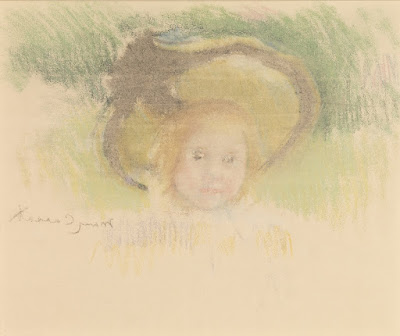
Mary Cassatt, Girl in a Hat with a Black Ribbon
pastel counterproof, 17 3/4 x 21 1/8 in. 

Contact the galleries for additional information about these works: 
art@cavaliergalleries.com or 203.869.3664 | 212.570.4696